
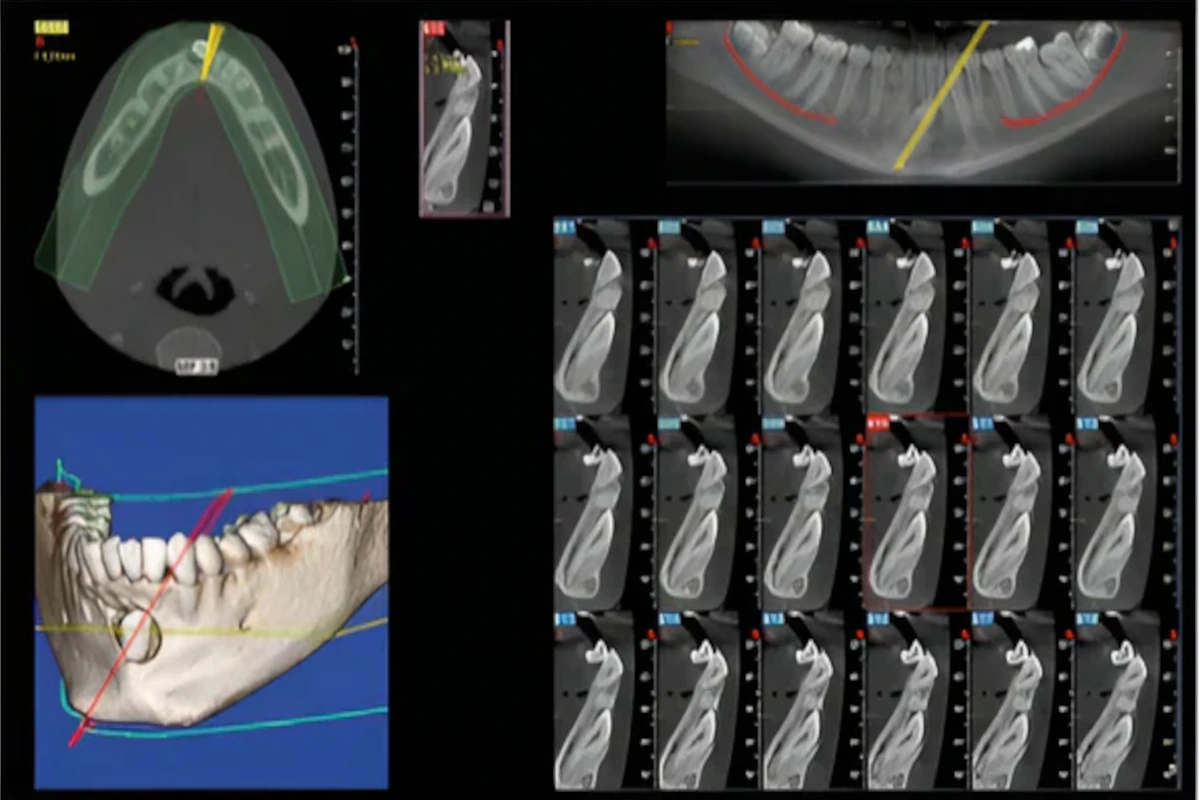
Ψηφιακή Ογκομετρική Τομογραφία (CBCT)
Η τρισδιάστατη ακτινογραφική απεικόνιση αποτελεί επιστημονικό επίτευγμα με πολλά πλεονεκτήματα αλλά και μέσο ακριβέστερης και ασφαλέστερης διάγνωσης. Σήμερα, η τρισδιάστατη ακτινογραφική απεικόνιση στη σύγχρονη οδοντιατρική πράξη μέσω Cone Beam Computer Tomography (CBCT) αποτελεί πολύτιμο διαγνωστικό εργαλείο σε όποιες ανατομικές δυσκολίες παρουσιάζονται σε ένα σχέδιο εμφυτευματικής κυρίως ή γενικής οδοντιατρικής θεραπείας και όχι μόνο (κάτω φατνιακό νεύρο, ρινικοί – παραρινικοί κόλποι κ.α). Ο σωστός και ακριβής σχεδιασμός προστατεύει τον ασθενή, ενώ παράλληλα παρέχει μοναδικά πρωτόκολλα σχεδιασμού θεραπείας και φόρτισης όσον αφορά τα οδοντικά εμφυτεύματα. Η πολύ μεγαλύτερη ακρίβεια απεικόνισης από αυτή ενός Dental CT παρέχει τη δυνατότητα ψηφιακής τοποθέτησης εμφυτευμάτων στον υπολογιστή από τα δεδομένα της ακτινογραφίας μέσω ειδικού λογισμικού με σκοπό την ακριβέστερη σχεδίαση και την ασφάλεια του ασθενούς.
Συνεπώς, ένα τέτοιο μηχάνημα θα μπορούσε να χαρακτηριστεί ως πολύτιμο διαγνωστικό και επικοινωνιακό εργαλείο αφού πλέον το σχέδιο θεραπείας παρουσιάζεται απτά στον ασθενή πριν την εκτέλεση. Έτσι εξασφαλίζεται ασφάλεια, άνεση, ταχύτατη αποκατάσταση, ακριβέστερη απεικόνιση και σχεδίαση. (immediate loading – same day teeth). Η χαμηλή δόση ακτινοβολίας, παρόμοια σχεδόν με ενός ορθοπαντογράφου αλλά και ο πολύ μικρός χρόνος ακτινοβόλησης συγκριτικά με αυτή ενός αξονικού τομογράφου αποτελούν τεχνολογικά επιτεύγματα με κύρια κατεύθυνση τον οδοντιατρικό ασθενή καθώς δεν τον επιβαρύνουν τόσο παρέχοντας δυνατότητες απεικόνισης πολύ ακριβέστερες από άλλα απεικονιστικά μηχανήματα. Το μηχάνημα μπορεί να ακτινοβολήσει μόνο την περιοχή του κρανίου και ειδικά των γνάθων και των ιγμορείων άντρων γεγονός που το καθιστά κατάλληλο και μόνο για οδοντιατρική χρήση. Η δυνατότητες χρήσης του δε απευθύνονται σε κάθε οδοντιατρικό κλάδο από τον γενικό μέχρι τον ειδικό οδοντίατρο και όπου κρίνεται αναγκαία η αναλυτική απεικόνιση των γνάθων.
Η χρήση του απευθύνεται τόσο σε ασθενείς για ακτινογραφίες οδοντιατρικού τύπου αλλά και σε οδοντιάτρους που μπορούν να το χρησιμοποιήσουν για διαγνωστικούς σκοπούς περιορισμένου πεδίου και ακριβέστερη απεικόνιση σε περιπτώσεις ενδοδοντίας για παράδειγμα, κροταφογναθικών διαταραχών, ή για μια απλή πανοραμική ακτινογραφία κ.α. Η χρήση της τρισδιάστατης αξονικής τομογραφίας κωνικής δέσμης – Cone Beam Computer Tomography δεν περιορίζεται μόνο στην εμφυτευματολογία αλλά σε κάθε τομέα της οδοντιατρικής αποτελώντας σήμερα πολύτιμο και απαραίτητο διαγνωστικό εργαλείο.
Πλεονεκτήματα
Αξονικός τομογράφος αποκλειστικά οδοντιατρικής χρήσης με ενδείξεις σε εμφυτευματολογία, ενδοδοντία, ορθοδοντική, περιοδοντολογία, χειρουργική στόματος. Οπισθοπρόσθια και Πλάγια Κεφαλομετρική ακτινογραφία, προκύπτει ως ανάλυση της μίας αρχικής αξονικής τομογραφίας περιορίζοντας ακόμα περισσότερο την ακτινοβόληση του ασθενή σε περίπτωση που κρίνονται απαραίτητες οι παραπάνω απεικονιστικές μέθοδοι ειδικά σε νεαρούς ασθενείς για ορθοδοντική αποκατάσταση. Πολύ μικρή έκθεση ακτινοβολίας παραπλήσια μιας απλής πανοραμικής ακτινογραφίας με τρισδιάστατη απεικόνιση. 20-50 φορές μικρότερη ακτινοβόληση σε σχέση με την κλασική αξονική τομογραφία. Πολύ λεπτό πάχος τομής 5-15 φορές μικρότερο σε σχέση με την κλασική αξονική τομογραφία όπου ενδείκνυται (ψηφιακό πλάνο θεραπείας- guided surgery).
Δυνατότητα ψηφιακής ανάγνωσης και τροποποίησης ογκομετρικών δεδομένων στο ιατρείο από τον παραπέμποντα. 1:1 μετρήσεις με focus στην πάνω ή την κάτω γνάθο ανάλογα το μασητικό επίπεδο ή και σε ένα μεμονωμένο δόντι χωρίς την παραμόρφωση της πανοραμικής ακτινογραφίας. Πολύ μικρό focal spot – διακριτική ικανότητα. Μεγαλύτερο εύρος πεδίου σε σχέση με μια πανοραμική ακτινογραφία (6-12 inches). Απλή, ασφαλής, ακριβής, ταχύτατη, αναλυτικότερη απεικόνιση σε 3 διαστάσεις. Πραγματικός χρόνος ακτινοβόλησης ελάχιστος καθότι η ακτινοβόληση είναι παλμική και ανάλογα με τις διαστάσεις του ασθενούς. (40% μικρότερη ακτινοβόληση σε παιδιά απ’ ότι σε ενήλικες). Πολλαπλές λήψεις σε 360ο με μια μόνο απλή περιστροφή –κωνική ακτινοβόληση ασθενούς. Στην κλασική αξονική τομογραφία κανονικά ο ασθενής ακτινοβολείται εγκάρσια και με πολλαπλές περιστροφές. Ψηφιακή σχεδίαση σχεδίου θεραπείας ως εργαλείο επικοινωνίας μεταξύ οδοντιάτρου και ασθενή.